Building Resilience: Enhancing Mental Health and Wellbeing
 While you may not have much control over outside circumstances, there are steps you can take to remain calm and maintain inner peace.
Authors: Dr. Amit Abraham and Dr. Sohaila Cheema
With the ongoing national and regional situation, it is natural to feel overwhelmed, uncertain, helpless, or even angry. Life has rapidly changed from what it used to be, and day-to-day routines, such as going to work, sending children to school, meeting with friends and family or going to a park or gym have been disrupted. Directives to remain indoors can potentially increase worry or tension, and the constantly changing news cycle can aggravate these feelings. It is during times of stress that mental health and wellbeing need to be prioritized.
Establish boundaries with news
It is important to stay informed, but how you consume the news is just as important. Constantly checking a news feed or social media can fuel stress or worry. Rather, set specific times of the day to check the news to avoid constant emotional swings. Choose credible, well-established sources when it comes to news, for instance:
Qatar Ministry of Interior (MOI) on X (formerly Twitter)
Qatar Government Communications Office channel on WhatsApp
Qatar News Agency
Acknowledge your feelings
Fear, stress, frustration, anxiety, helplessness - these are all normal reactions to the current circumstances. Recognizing these feelings, but not letting them overwhelm you, is the first step to a better state of mind. Taking a few minutes to reflect on these feelings, speaking to a trusted friend or family member, or writing your thoughts in a journal, can help you to healthily process these emotions.
Set up calm environments
A calm and organized environment can significantly improve mood and reduce stress, especially during challenging times. Simple changes - like adding indoor plants, displaying meaningful photos, or playing soft, soothing sounds - help create a peaceful atmosphere. By intentionally shaping our surroundings, we support emotional (and overall) wellbeing, making it easier to cope with daily pressures.
Cultivate connections
Nurturing relationships – with family, friends, colleagues, or even pets - can provide comfort and strength during trying times. Share your thoughts with those you trust and encourage them to do the same. Offering support, whether in-person or virtually, fosters a sense of belonging and can be deeply uplifting. Small acts of kindness help build community, and compassion towards yourself and others plays a vital role in resilience and overall wellbeing.
Create structured routines
Dedicate some time in your day to engage in physical activity (within your home where possible) and ensure that you eat a variety of nutritious foods. If you are not fasting in the month of Ramadan, ensure you drink plenty of water to stay hydrated, and that you get restful sleep, aiming for 7-9 hours a night. If you are fasting, ensure you consume a balanced diet and sufficient fluids once you break your fast. Having a regular routine can be calming. Engage in activities that relax you such as reading books, meditation or breathing exercises. Practice gratitude and self-care: make a list of moments, things or people you are thankful for. All of these can help contribute to a more positive mindset.
Manage anger constructively
Feeling angry during stressful or uncertain times is completely normal. What matters is how you respond to those feelings. Try expressing your emotions through creative activities such as writing, painting, or playing music - these can be therapeutic and help release tension in a positive way. Finding healthy outlets can make a meaningful difference in your wellbeing.
Seek professional help
If stress or anxiety becomes overwhleming, don’t hesitate to reach out for professional support. Asking for help is a sign of strength, not weakness, and timely guidance can make a meaningful difference. Below are some important telephone numbers you can contact if you need help:
National Mental Health Helpline offers free and confidential support: 16000, then select option 4
Police, Fire and Ambulance: 999
Emergency services for people who are hearing-impaired: 992
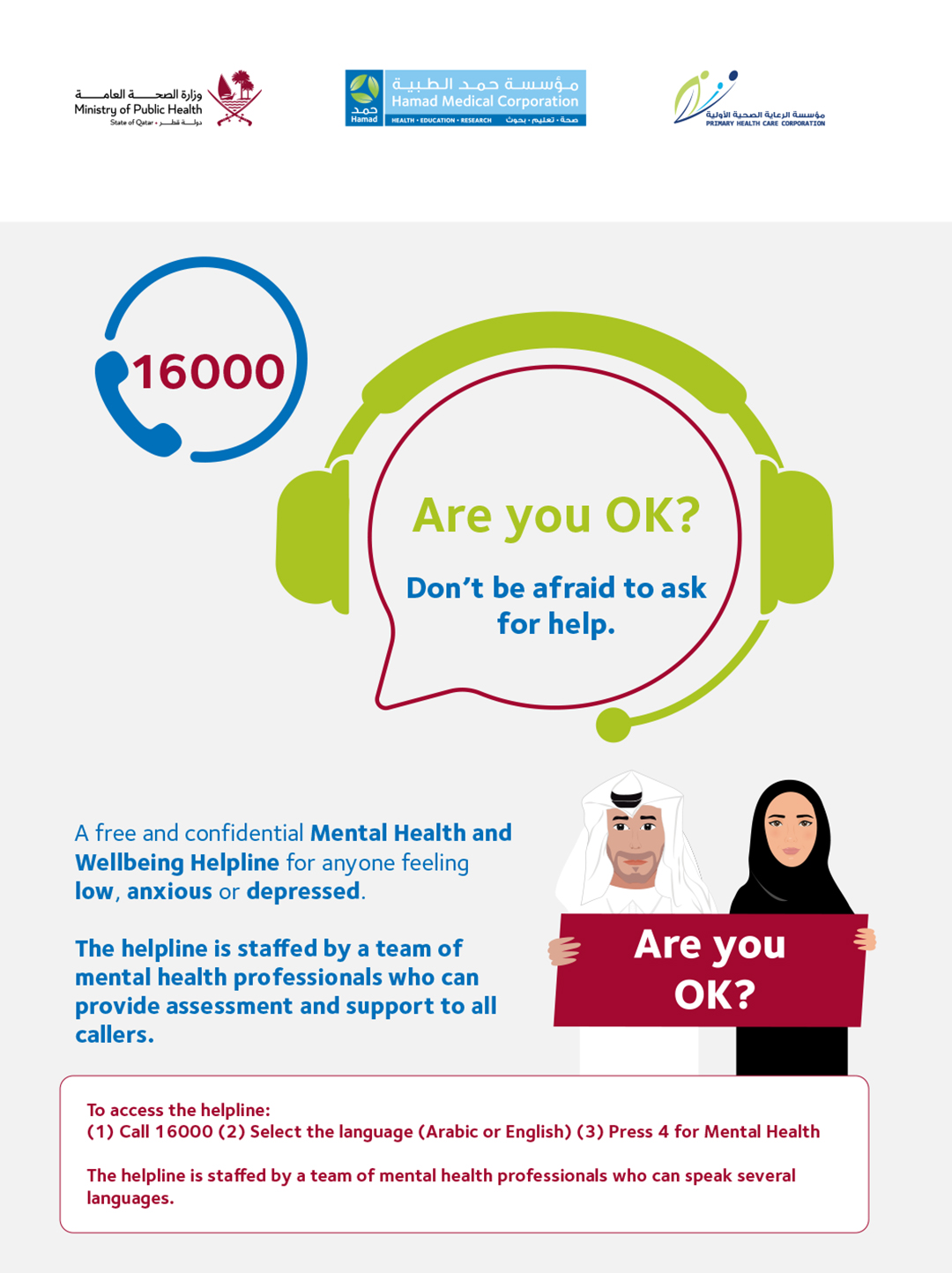 Source: https://hamad.qa/EN/Hospitals-and-services/HMC-Mental-Health-Service/Pages/default.aspx
Practicing self-care and prioritizing emotional wellbeing during stressful times can be harder than it sounds, yet it remains essential. When we take care of ourselves, we have more energy, patience, and compassion to offer those around us, strengthening our relationships. Let’s make a shared commitment to kindness - toward ourselves and toward each other.
Sources: World Health Organization| National Institute for Mental Health| Sehanafsia - Your Mind Matters| Qatar Ministry of Interior (MOI)| Qatar Government Communications Office| Qatar News Agency| Hamad Medical Corporation Mental Health Service
Edited by: John Hayward