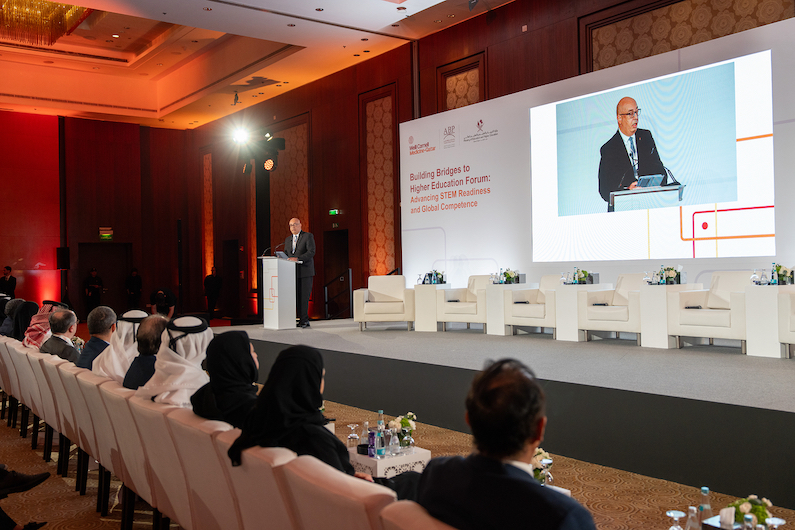
WCM-Q and Qatar Foundation’s ABP co-host “Building Bridges to Higher Education” forum
 Dr. Marco Ameduri of WCM-Q addresses the Building Bridges to Higher Education Forum.
Weill Cornell Medicine-Qatar (WCM-Q), a QF partner university, and The Academic Bridge Program (ABP), a member of Qatar Foundation, co-organized the “Building Bridges to Higher Education: Advancing STEM Readiness and Global Competence” forum, held at the Hilton Doha Hotel.
The one-day forum, held in partnership with Qatar’s Ministry of Education and Higher Education (MOEHE), and in partnership with the United Nations Educational, Scientific and Cultural Organization (UNESCO), brought together more than 200 participants, including secondary-school educators, academic counselors, university leaders, and representatives of the MOEHE.
The forum was designed to support high school students in their transition to higher education and help them explore academic and career pathways in science and healthcare.
The program opened with welcoming remarks from Dr. Rachid Bendriss, forum chair and associate dean for foundation, student outreach and educational development programs at WCM-Q; Dr. Saheim K. Al-Temimi, Director of ABP; and Dr. Marco Ameduri, senior associate dean for premedical education and Education City collaborative curricular affairs at WCM-Q. The welcoming remarks were followed by a keynote speech by Dr. Batool Hashem Al Sayed, Director of higher education institution affairs at the Ministry of Education and Higher Education. Mr. Salah Zaki Khaled, Director, UNESCO regional office for the Gulf States and Yemen, also addressed participants. 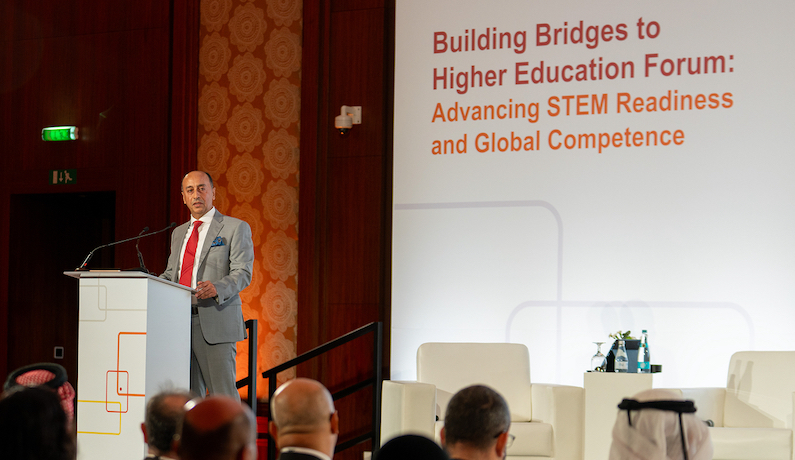 Three panel discussions explored enhancing pre-university science readiness in the age of AI; bridging secondary school and higher education through the student transition experience; and global citizenship and education for sustainable development.
Panelists and moderators represented WCM-Q, Hamad Bin Khalifa University, Qatar University, Georgetown University in Qatar, Lusail University, Mesaieed International School, the ABP, the MOEHE, UNESCO, the United Nations High Commissioner for Refugees (UNHCR), the World Innovation Summit for Education (WISE), and the Education Above All Foundation, alongside secondary-school educators and a final-year WCM-Q medical student Hessa Al-Thani.
Dr. Bendriss said: “The transition to university is a pivotal step in young people’s lives, making collaboration among educators and advisors essential to providing consistent, effective guidance. The Building Bridges to Higher Education Forum offers a valuable platform to strengthen this collaboration and equip students with the knowledge, skills and confidence to succeed. It is also an opportunity to enhance pre-university science readiness in the age of AI, while fostering global citizenship, sustainable development and the competencies needed to thrive in STEM and beyond.”
Dr. Al-Temimi said: “The importance of this forum lies in bringing schools, universities, and partners together around one goal: preparing students to succeed in higher education. The transition from secondary school to university is not only an academic milestone but a defining journey that calls for strong academic foundations, confidence, and awareness of the pathways available. At the Academic Bridge Program, we believe building bridges between school and university is a shared responsibility. Our partnership with Weill Cornell Medicine-Qatar, together with the Ministry of Education and Higher Education and UNESCO, helps advance this goal and turn dialogue into practical solutions for our students’ future.” 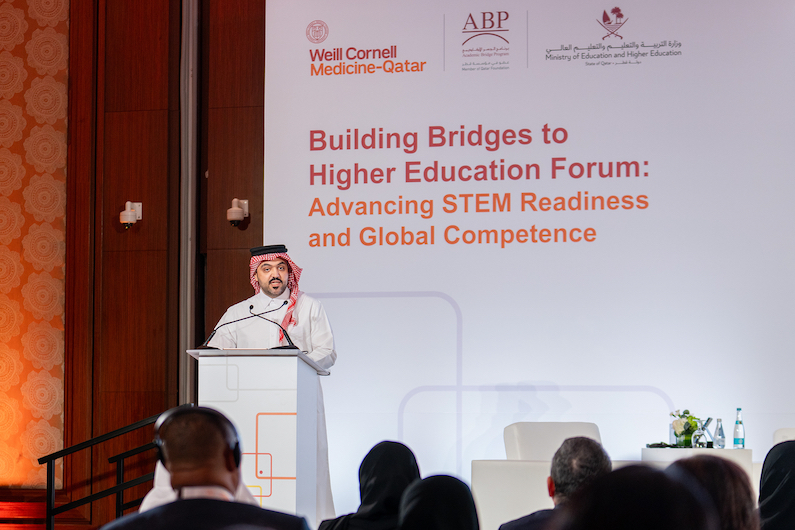 Dr. Al Sayed said: “The Ministry emphasized that building educational pathways is no longer the responsibility of any single stage of education, but rather a continuous process in which schools, universities, and relevant stakeholders work together to prepare students for the future. The forum provides a platform for dialogue on the key factors that shape students’ academic choices and broaden their intellectual horizons, particularly in the fields of Science, Technology, Engineering, and Mathematics (STEM), enabling them to make more informed decisions that are aligned with national development priorities and rapidly evolving global trends.”
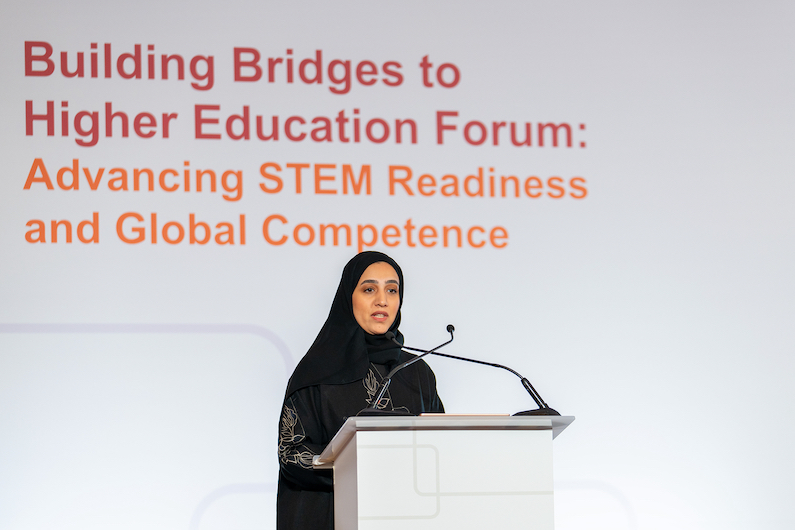 Mr. Khaled said: “Preparing young people for higher education goes beyond academic achievement. It means equipping them with critical skills, knowledge and attitudes to navigate a rapidly changing world. At UNESCO, we believe that stronger collaboration between schools and universities is essential to making this transition more inclusive, supporting students in pursuing STEAM opportunities, and preparing a generation that can contribute to sustainable development and thrive as global citizens, including in times of uncertainty.”