Movember Heart Check: What Everyone Should Know About Heart Attacks
 Taking steps to understand the symptoms of a heart attack, adopting a heart-healthy lifestyle, and seeking regular medical check-ups can help both men and women protect their health and enjoy longer, healthier lives with their families and communities.
Authors: Anupama Jithesh, Dr. Sohaila Cheema, and Dr. Karima Chaabna
This Movember, we encourage our community to put heart health at the top of the conversation. Since heart disease is a major health concern for men, raising awareness about heart attacks, their warning signs, and prevention strategies is an important step toward healthier lives and stronger communities. Although women generally have a lower risk of heart attacks before menopause due to the protective effects of estrogen, this risk increases after menopause, making heart health awareness important at every stage of life. Heart attacks can affect both men and women, and while the risk increases with age, they can occur in people of all backgrounds and ages.
A heart attack occurs when blood flow to part of the heart is significantly reduced or completely blocked. This blockage usually occurs when fatty deposits, cholesterol, and other substances build up inside the coronary arteries. This buildup, known as plaque, can narrow or block arteries over time, a condition known as atherosclerosis. If a plaque deposit ruptures, a blood clot can form and block the artery, cutting off blood flow to the heart muscle, causing part of the heart muscle to become damaged or die. The longer the blockage remains untreated, the greater the damage, which can lead to permanent heart injury. However, healthy lifestyle choices, managing risk factors, and seeking early medical care can reduce your risk of a heart attack and protect long-term health.
Symptoms of a heart attack
Some heart attacks begin suddenly, while others develop gradually with mild pain or discomfort. Symptoms of a heart attack include:
-
Uncomfortable pressure, squeezing, fullness, or pain in the centre of the chest that lasts more than a few minutes or goes away and return
-
Pain or discomfort in one or both arms, the jaw, neck, back, or stomach
-
Shortness of breath
-
Sweating
-
Indigestion that may feel like heartburn
-
Dizziness or light-headedness
-
Nausea or vomitting
If you suspect a heart attack, call 999 immediately. Recognising the symptoms is vital. Do not wait for them to pass or assume they are caused by stress, fatigue, indigestion, or hot weather.
Risk factors
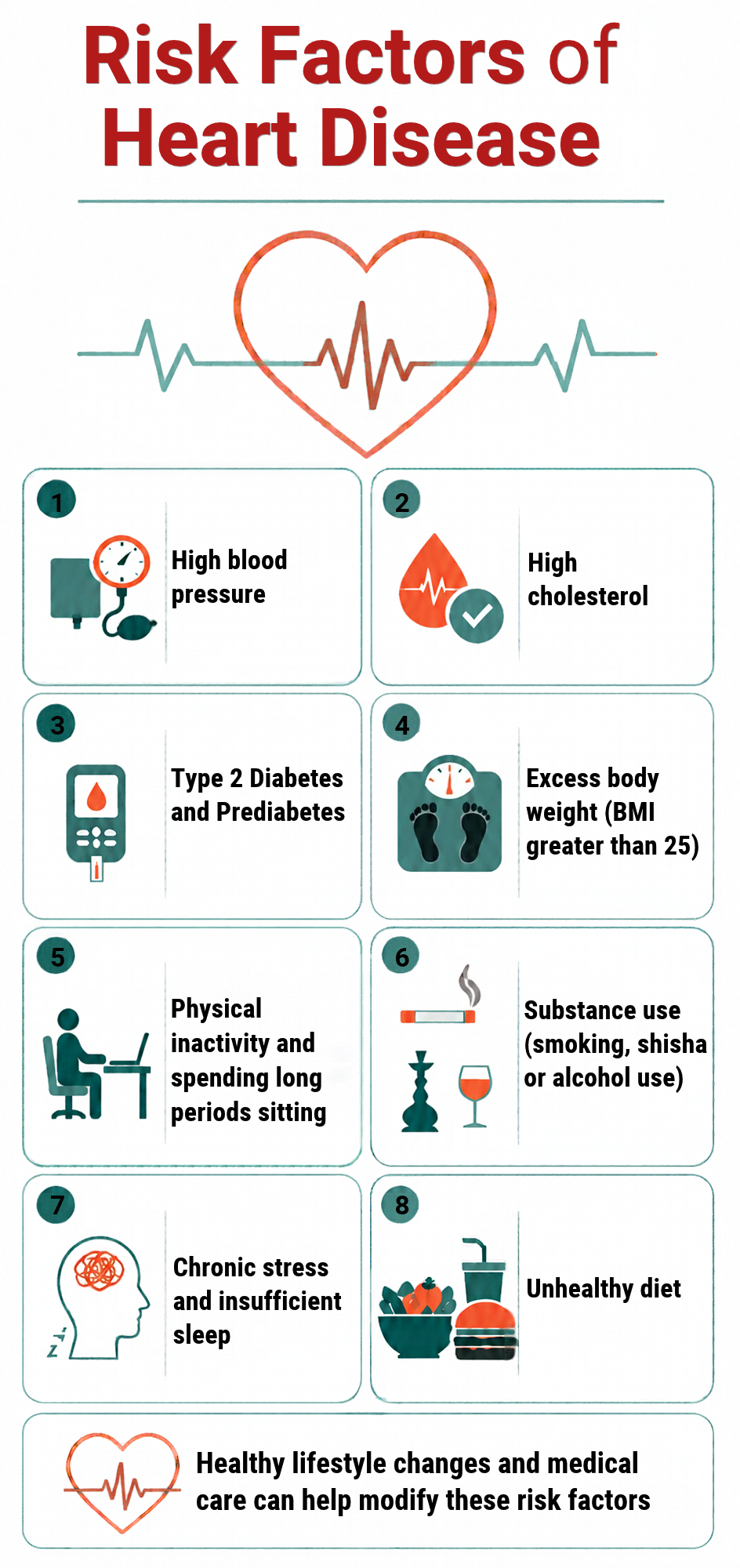
Heart attack risk factors can be influenced by both lifestyle and health conditions. Factors such as smoking, high blood pressure, high cholesterol, diabetes, obesity, physical inactivity, an unhealthy diet, chronic stress, and a family history of heart disease can all increase the likelihood of a heart attack. Understanding and managing these risk factors is key to protecting heart health and reducing the risk of cardiovascular disease.
Screening and early detection
Men aged 40 years and older should have their heart disease risk assessed, including checks of blood pressure, cholesterol, and blood sugar levels. Those with a family history of heart disease or other risk factors may need earlier screening. Consult your healthcare professional about the appropriate tests and screening frequency.
Lifestyle changes for lasting benefits
Small, consistent changes can improve heart health. Support from family, friends, and healthcare professionals can help you maintain healthy habits.
i. Stay physically active
- Regular physical activity lowers the risk of heart disease and also helps maintain a healthy weight. It lowers blood pressure, cholesterol, and blood glucose levels.
- Aim for 150-300 minutes of moderate-intensity aerobic activity, such as brisk walking, or 75-150 minutes of vigorous-intensity aerobic activity, such as running, or an equivalent combination of both. Include muscle-strengthening activities on at least two days per week.
- Start gradually and remember that any physical activity is better than none. Walking, doing household chores, and playing with children all count as activity.
ii. Eat a heart-healthy diet
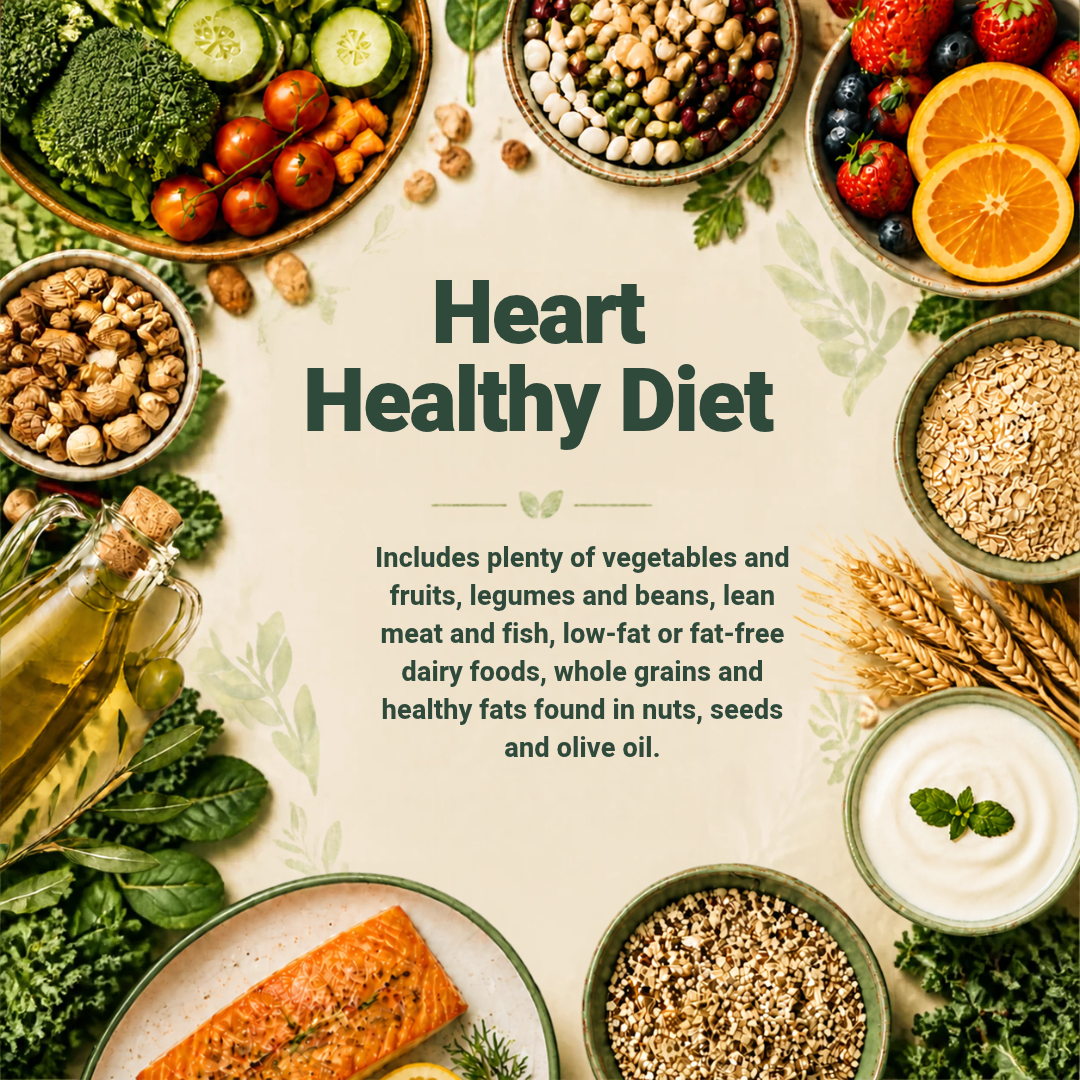
- Increase your intake of fruits, vegetables, whole grains, legumes, and other fibre-rich foods.
- Choose healthier fats such as those found in olive oil, nuts, and seeds.
- Avoid alcohol, foods high in salt, added sugars, sugary drinks, and highly refined carbohydrates.
- Reduce saturated fat, found in red meat, full-fat dairy products, palm oil, and coconut oil, and avoid trans fats, found in some fried fast food, chips, and baked goods.
- Avoid highly processed food, such as processed meats.
iii. Maintain a healthy weight
- Reach and maintain a healthy weight.
- Losing just 3-5% of body weight can improve triglycerides and blood sugar levels. Further weight loss can help reduce blood pressure and cholesterol levels.
iv. Get good quality sleep
- Aim for at least seven hours of sleep each night
- Maintain a regular sleep schedule by going to bed and waking up at the same time every day.
- Seek medical help if sleep problems or daytime tiredness persist.
v. Manage stress
- Manage stress by engaging in a sport or exercise, yoga, mindfulness or meditation.
- Seek professional help when needed and avoid relying on smoking, drinking, or overeating to cope with stress.
vi. Avoid smoking, shisha and vaping (e-cigarettes)
- Smoking tobacco, including shisha, damages the heart and blood vessels. It increases the risk of cardiovascular disease and cancer, and negatively affects lung health and overall well-being. Research suggests that certain cooling additives found in some e-cigarettes may interfere with normal heart function and could contribute to irregular heart rhythms and heart attacks.
- Quit smoking, shisha, vaping, and avoid secondhand smoke.
- Quitting smoking is one of the most impactful lifestyle changes you can make. Quitting has immediate health benefits, and the risk of heart disease decreases over time.
Start caring for your heart today
As we observe Movember and Men's Health Awareness Month, it is a timely reminder that heart disease remains one of the leading health concerns affecting men. The good news is that many heart attacks can be prevented through healthy lifestyle choices and regular health screenings. Taking steps to understand the symptoms of a heart attack, adopting a heart-healthy lifestyle, and seeking regular medical check-ups can help both men and women protect their health and enjoy longer, healthier lives with their families and communities.
Sources: American Heart Association | Mayo Clinic | Canadian Men’s Health Foundation | WHO | MC2 | AHA2
Edited by: John Alexander Hayward